

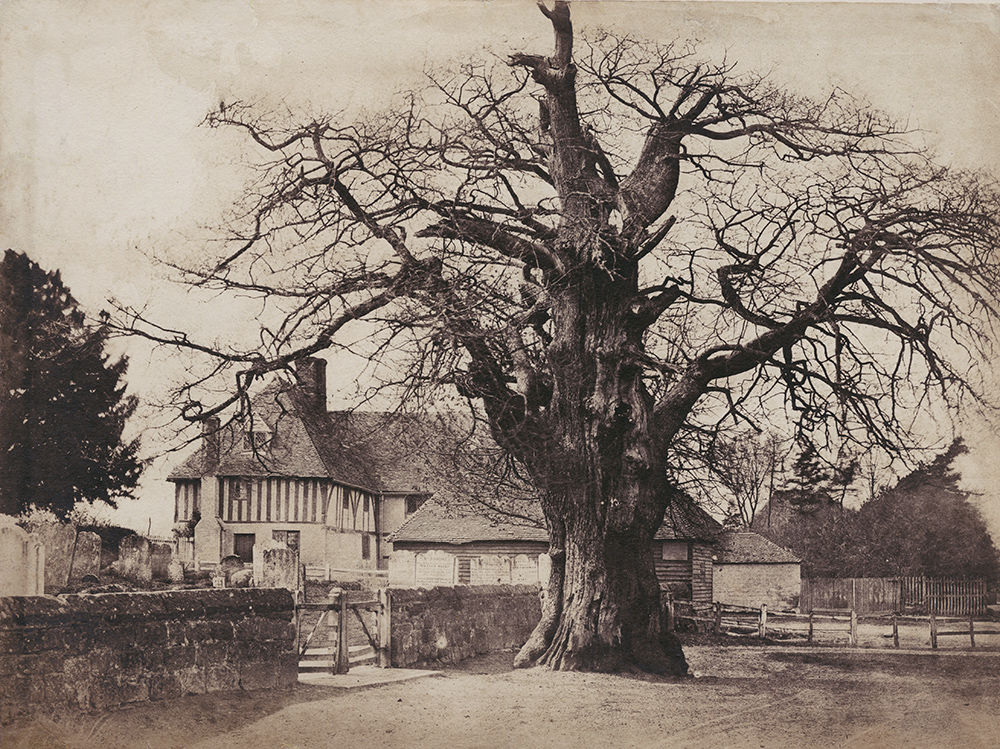
The Oak Tree in Winter, Hawkhurst, Kent, UK
Sale
P.O.R.

Madame Hugo
Sale
$2,800

Landscape with Man Fishing in Pond
Sale
$4,800
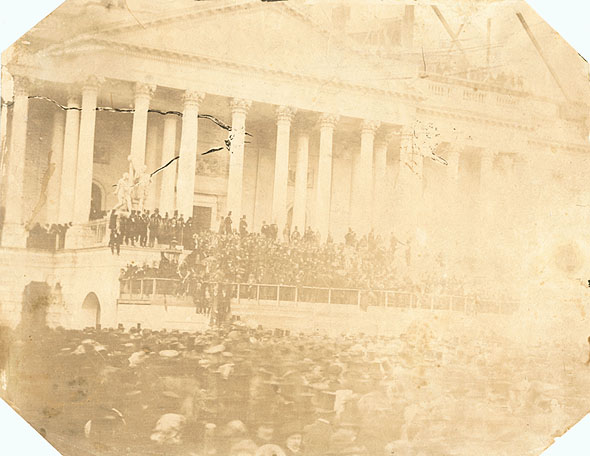
Inauguration of President James Buchanan on the Capitol Steps
Sale
$8,000

En Normandie (Calvados)
Sale
$4,000

Primitive Study of a Grape Vine
Sale
$12,000

Temple of Athena, Paestum, Italy
Sale
$2,200

Unidentified Actress Lying Provocatively on a Settee
Sale
$6,400
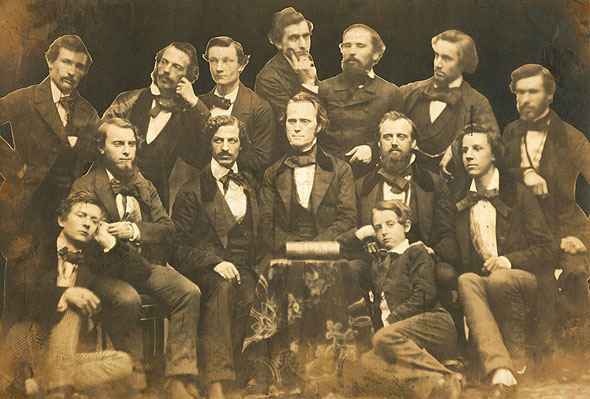
Members of the Whitehurst Photography Studio
Sale
P.O.R.
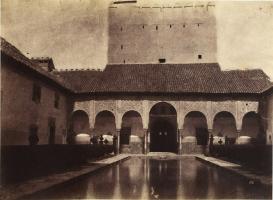
De Launay--Patio de los Arrayanes, Alhambra, Granada, Spain
The salt print was photography's earliest negative and positive print technique, and occupies an exalted place in photography's history, having been developed by William Henry Fox Talbot in the medium's earliest days--around 1834-35--and from his earliest photographic innovations. The technique involves soaking the photographic paper in a salt solution, and coating one side with silver nitrate to yield a light-sensitive ground for exposing a negative, under glass, to sunlight for up to two hours. For some two decades, until the improvements in clarity brought about by the albumen print technique, salt prints defined print-making at its best.
The images in this exhibit are certainly among the greatest available examples of the salt print breakthrough, which allowed photography's pioneers to reach early heights of verisimilitude. From Gustave Le Gray's earliest paper work of superb architectural and landscape work (of his first trip in 1849 to the forests of Fontainebleau) to examples from Hill and Adamson's remarkable series of early portrait photography, as well as important portraiture and architectural studies by French masters Edouard Baldus, Felix Teynard, Baron Louis-Adolphe Humbert de Molard and August Salzmann, these salt prints convey the range of early photography's ambition and artistic vision.

Le Gray--Abside de St. Sernin de Toulouse
The quality, rarity and historical import of these examples are matched by the telling details they impart of the photographic process and its challenges in the early days of the medium. In some cases there are flaws and shadowings that have resulted from the original glass plate negative. Such evidence of process and the difficulties of assembling the final salt print imparts tremendous charm and scholarly interest to many of these photos.
By the 1850s, masters such as Salzmann and Teynard were learning how to optimize photography's potential for documenting the architecture and atmospheres of exotic locales, for which the nascent photography audience had a great appetite. Wonderfully composed images of sacred spots in Jerusalem, Hindu temples, Egyptian ruins, and other icons of antiquity are captured in all their fascinating detail and in balanced contrasts of sun and shadow, imparting depth and an emerging photographic realism that would soon flourish in the medium's first golden age of the 1850s.
However, in those early years following Talbot's initial achievement, the medium's first flush of positive printing led photographers to experiment boldly, offering up such novelties as microscopic images of fossilized wood, or crafting some of the early classics of Pictorialism with delicate, pastoral images of trees, carts, serene lakes and other landscape elements. As this exhibit reveals, the salt print process played a crucial role in opening up the world to the many worlds of photography.
Exhibited and Sold By
Contemporary Works / Vintage Works, Ltd.
258 Inverness Circle
Chalfont, Pennsylvania 18914 USA
Contact Alex Novak and Marthe Smith
Email info@vintageworks.net
Phone +1-215-518-6962
Call for an Appointment


Share This